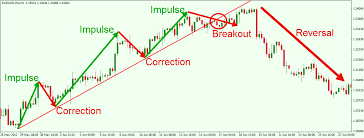
In trading, many people search for perfect indicators, secret strategies, or precise entry signals. They believe success comes from predicting exactly where the market will turn.
Experienced traders know something different.
Markets don’t reward prediction.
They reward alignment.
And alignment starts with recognising what many traders quietly call “the force” — the underlying directional pressure that pushes price forward. In simpler terms, this force is the trend.
This article explains what “the force” really means in trading, why trend recognition matters more than timing, and how disciplined traders learn to trade with the market instead of fighting it.
What Traders Mean by “The Force”
“The force” is not a mystical concept. It is simply a way to describe market momentum and direction.
It reflects:
- Where price has been moving consistently
- Which side (buyers or sellers) is in control
- How strong participation appears to be
When the force is strong, price moves with purpose.
When it is weak, price drifts, ranges, and hesitates.
Recognising this difference is a foundational trading skill.
Why Most Traders Miss the Force
Many traders focus too closely on short-term movements.
They zoom in on:
- Small time frames
- Minor pullbacks
- Single candles
In doing so, they lose sight of the broader structure.
The market may be trending clearly on a higher time frame, but short-term noise distracts the trader into countertrend decisions.
Fighting the trend feels clever.
Following it feels boring.
But boring often works better.
Trends Reflect Collective Market Behavior
Trends form because large groups of participants act in the same direction.
These participants may include:
- Institutions
- Corporations
- Long-term investors
- Macro-driven traders
Retail traders do not create trends — they respond to them.
Recognising the force means understanding where larger participation is likely aligned, not assuming the market will reverse just because price has moved “too far.”
Why Trading With the Trend Reduces Pressure
Trading against the trend requires precision.
Trading with the trend allows margin for error.
When aligned with the force:
- Pullbacks are less threatening
- Entries don’t need to be perfect
- Risk is easier to define
This is why trend trading is often recommended for developing traders. It simplifies decision-making.
You are not guessing where price might go.
You are responding to where it is already going.
Time Frame Matters When Identifying the Force
Trends look different depending on perspective.
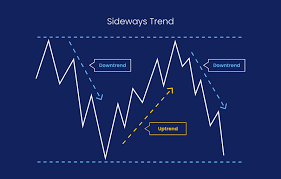
A market can:
- Trend up on a daily chart
- Consolidate on a 15-minute chart
- Pull back on a 5-minute chart
This does not mean the trend is broken.
Experienced traders identify the force on a higher time frame, then use lower time frames only for execution.
Context comes first.
Timing comes second.
The Most Common Mistake: Fighting the Trend
Many traders lose consistency not because their analysis is poor, but because their bias conflicts with reality.
Common behaviors include:
- Selling in strong uptrends
- Buying in clear downtrends
- Expecting reversals without confirmation
- Overtrading during pullbacks
Markets can stay directional longer than traders expect.
The trend does not owe anyone a reversal.
How Traders Align With the Force
Professional traders do not need complex tools to recognise the trend.
They focus on:
- Higher highs and higher lows (uptrend)
- Lower highs and lower lows (downtrend)
- Clear directional movement over time
Indicators may help, but structure matters more than signals.
When the structure supports direction, the force is visible.
Patience Is Part of Trend Trading
Trading the trend does not mean trading constantly.
Often, the best decision is to wait.
Traders aligned with the force:
- Wait for pullbacks
- Avoid chasing price
- Accept missed opportunities
Waiting is not inactivity.
It is discipline.
The CEO Mindset: Don’t Fight What’s Working
Successful decision-makers don’t fight momentum.
In business, they expand what works.
In trading, they align with what moves.
Trying to outsmart the market is expensive.
Respecting direction is efficient.
The goal is not to be right.
It is to be aligned.
When the Force Weakens
Trends do not last forever.
Signs the force may be weakening include:
- Reduced momentum
- Increased consolidation
- Failure to make new highs or lows
Recognising this prevents overconfidence.
Trading the trend also means knowing when not to trade.
What “Trading the Trend” Really Means
It does not mean:
- Blindly buying or selling
- Ignoring risk
- Assuming continuation forever
It means:
- Respecting direction
- Defining risk clearly
- Accepting uncertainty
Trend trading is about probability, not certainty.
Final Thoughts: The Force Is Already There
You don’t need to create momentum.
You don’t need to predict reversals.
You don’t need to force trades.
The market already shows its hand.
When you learn to recognise the force and trade in its direction, trading becomes calmer, clearer, and more disciplined.
Trends won’t make every trade profitable.
But they give you something far more valuable:
alignment with the market instead of conflict against it.
That’s a force worth respecting.
End of article.
Summary:
You may have heard the saying �A Trend is your Friend until it Bends�. Technical Analysis helps us to identify a trend so we can jump on and ride it until it changes. Since the Forex market has very strong trends, technical analysis is a very effective technique�
Keywords:
Forex, Forex Trading, Technical Analysis, Mini Account, Trading, Leverage, Rapid, RapidForex, Investment, Business, Online, Charts, Trend, Charting
Article Body:
You may have heard the saying �A Trend is your Friend until it Bends�. Technical Analysis helps us to identify a trend so we can jump on and ride it until it changes. Since the Forex market has very strong trends, technical analysis is a very effective technique.
Some traders still persist on trading against the trend, they argue with it even though price movements are obviously in a trend. Buying when the currency is in a basic downtrend or selling when it�s in an uptrend, instead of buying.
Our primary purpose is to identify the major trend, intermediate trend and the short term trends and place trades in that direction. We then hold position until our calculations suggest otherwise.
Here�s a quote from Jesse Livermore, a tenacious, flamboyant and profitable Forex trader,
“We know that prices move up and down. They always have and they always will. My theory is that behind these major movements is an irresistible force. That is all one needs to know. It is not well to be too curious about all the reasons behind price movements.
You risk the danger of clouding your mind with non-essentials. Just recognize that the movement is there and take advantage of it by steering your speculative ship along with the tide. Do not argue with the condition, and most of all, do not try to combat it.”
There�s gold in these words. If the market action shows your analysis to be correct, the successful traders stay with the market and maximize profit according to his or her equity management rules.
If the market turns, the smart trader will get out and collect profits.
Watch the market and listen to what it tells you about upcoming trends and most importantly don�t ask for reasons for what it does, focus on the essentials.
There are often repeating patterns in price changes. Once established. They become the most probable way to predict price changes.
These can be categorized into two types of markets, trending and trend-less. Trending markets have up and down trends; these are typically less than 45� and are steady movers with occasional pauses or profit-taking periods.
Trend-less markets have very steep movement of more than 45� that most often can�t be sustained. Although price movements can shift a considerable number of pips in a short time period they often don�t produce much net profit.
Choppy markets often produce stop outs and the sideways market, with minimal price movements makes it very difficult to predict which way the price will move.
For these reasons, our objective is to get into a trending market and meet our trading objectives.
The underlying message here is, �Be a good friend to the trend�, a simple concept but powerful indeed.

Tinggalkan Balasan